Every industry depends on water storage in one way or another. From the massive tanks keeping mine sites operational, to the potable water reserves that safeguard hospitals and schools, tanks are the silent backbone of commercial, industrial, and public facilities.
Yet across sectors, the same critical mistakes are repeated time and time again. These errors shorten tank life, compromise water quality, and create unnecessary risks to safety, compliance, and budgets.
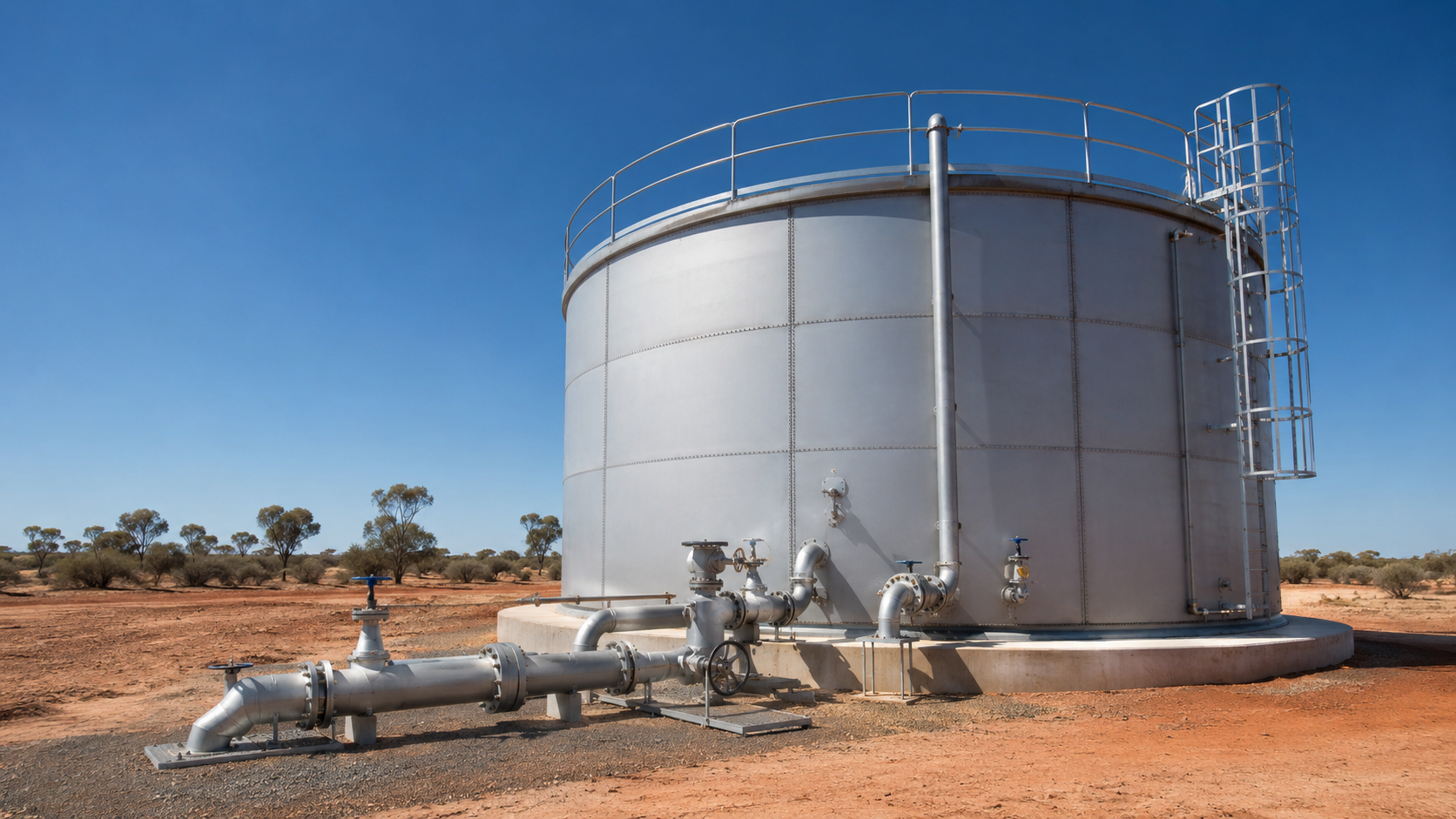
The Australian water industry applies a useful benchmark to stored water: treat it like a food-grade product — with the same standards applied to milk, wine, and grain storage. You wouldn't leave an unlocked milk vat uninspected for a decade. But that is effectively what happens with thousands of water storage assets across the country every year.
Too often, organisations view tanks as once-off investments. Install them, fill them, forget about them. The reality is that tanks are not static assets — they are systems made up of multiple interacting layers, each of which degrades on a different schedule. When a tank is neglected, these layers don't all fail at once — they fail quietly and at different rates, making the deterioration hard to detect until it becomes severe.
Standards like AS 1851 require routine inspection and documented service logs. Yet across hospitals, schools, councils, and commercial buildings, inspection schedules are routinely skipped — and when regulators or insurers request proof, the paperwork is missing. Two practices separate effective inspection programs from paper exercises: sequential photography at fixed reference points, and fresh eyes from an independent inspector who hasn't normalised the gradual decline.
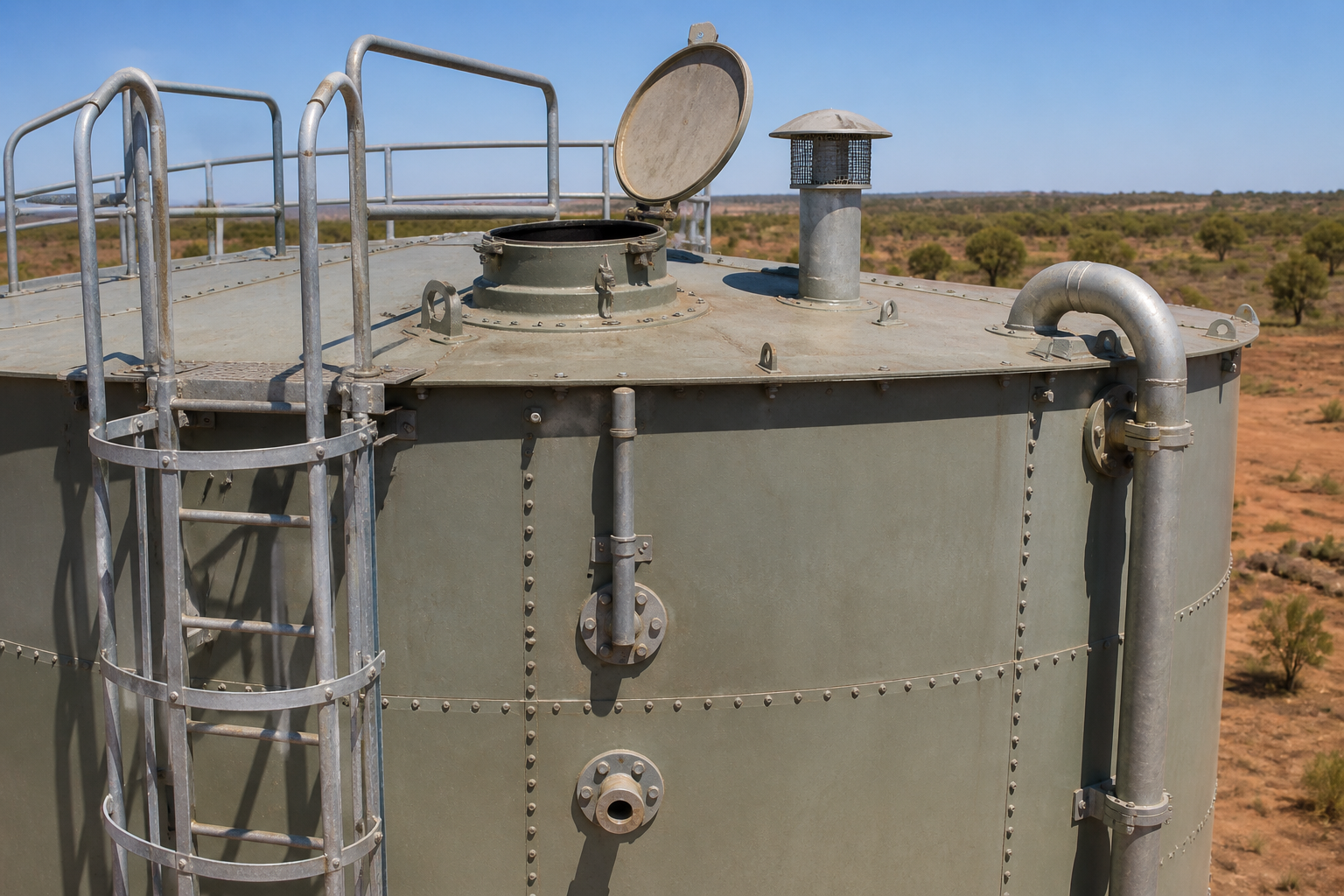
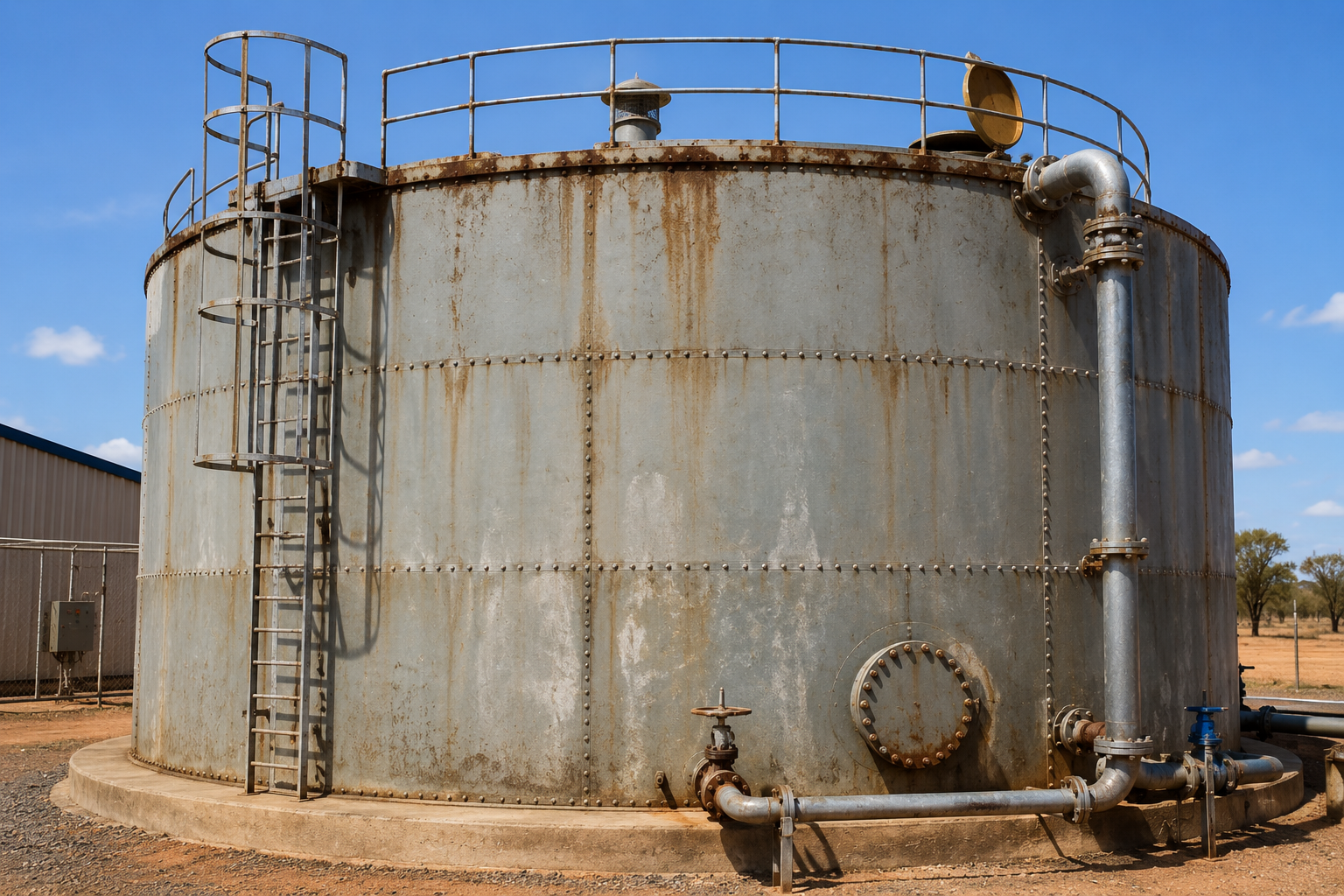
Every sector faces unique environmental and operational stresses. Mining tanks are not hospital tanks. Neither should be maintained like one. Mining environments suffer from high-dust ventilation failures, dissimilar metal corrosion, and temperature cycling on RPVC liners. Hospital platforms and hatch areas are the most common contamination entry point — not the water source itself. Agriculture faces UV degradation and seasonal fluctuation stress on liner seams.
Quick fixes, mismatched materials, and off-spec repairs create the appearance of rectification while the real problem continues beneath the surface. The single most important factor in coating performance is not the coating — it is surface preparation. A coating applied over contaminated or inadequately profiled steel will fail years ahead of schedule regardless of the product specification.
The most expensive maintenance decision is always the one made after the failure. Waiting until a problem becomes visible is the default mode for many organisations, despite the well-understood cost premium of reactive repair over planned maintenance. Tanks without active inspection programs are not on a maintenance schedule — they are running on luck.
Avoiding these mistakes requires discipline around a small number of well-understood maintenance activities, applied consistently: independent professional inspection every 1–4 years, sequential photography at every inspection, cleaning and desludging every 4–6 years for treated water, annual overflow pipe and outlet screen verification.
For mining and resource operations, cathodic protection systems require the same scheduled attention as the tanks themselves — anode replacement cycles of 8–15 years must be built into the maintenance register, not discovered during an emergency inspection.
For public facilities, overflow pipework provides a warm, sheltered habitat for vermin. Animal carcasses entering tanks through unsealed overflow pipes are a documented contamination source in the Australian water industry.
Water stagnation in low-turnover zones creates conditions where bacteria breed and disinfection residuals deplete. SCADA-integrated flow monitoring can detect abnormal turnover rates remotely before conditions deteriorate to the point requiring emergency intervention.
How often should industrial water storage tanks be inspected?
An independent inspection on a 1–4 year cycle, calibrated to the tank's condition and environment, is the single highest-return maintenance action available to asset owners. Mining and high-exposure environments typically require more frequent inspection than sheltered urban installations.
What is the cost difference between planned maintenance and emergency repair?
Industry experience consistently shows a 3–5 times cost multiplier between timely rehabilitation and emergency remediation or full replacement. The same tank identified at the right point in the deterioration cycle presents far smaller remediation scope than one assessed after pitting has penetrated the steel.
What unique risks do mining environments create for water storage tanks?
Mining environments suffer from high-dust ventilation failures, dissimilar metal corrosion from mixed materials, temperature cycling stress on RPVC liners, and aggressive water chemistry from mineral-laden groundwater. Cathodic protection anode replacement cycles of 8–15 years must be actively managed, not discovered during emergency inspection.
PC Water Infrastructure deploys ROV and UAV inspection capability capable of assessing tanks without full dewatering, reducing operational disruption while providing the condition data needed to make informed decisions.
Request a sector assessment